
Healthcare Website Design
Home Digital Marketing Website Development
What is Healthcare Website Design?
Healthcare website design is the process of creating medical practice websites that attract patients, build trust, and drive appointment bookings. It combines user-focused design, clear content, mobile optimization, and healthcare SEO to improve visibility, engagement, and conversions.
Why Healthcare Website Design Matters for Patient Acquisition
Patients are actively searching online for care, comparing providers, and making decisions based on what they find within minutes. When a medical practice website fails to answer questions, build trust, or make booking simple, those patients move on to a competitor. Healthcare website design plays a critical role in whether your practice captures or loses those opportunities. This page explains how a healthcare-focused web design company approaches structure, content, and performance, and what to expect when working with a team focused on generating real patient appointments.
Get Your Free Manufacturing Website AuditFeatured Manufacturing Website Designs
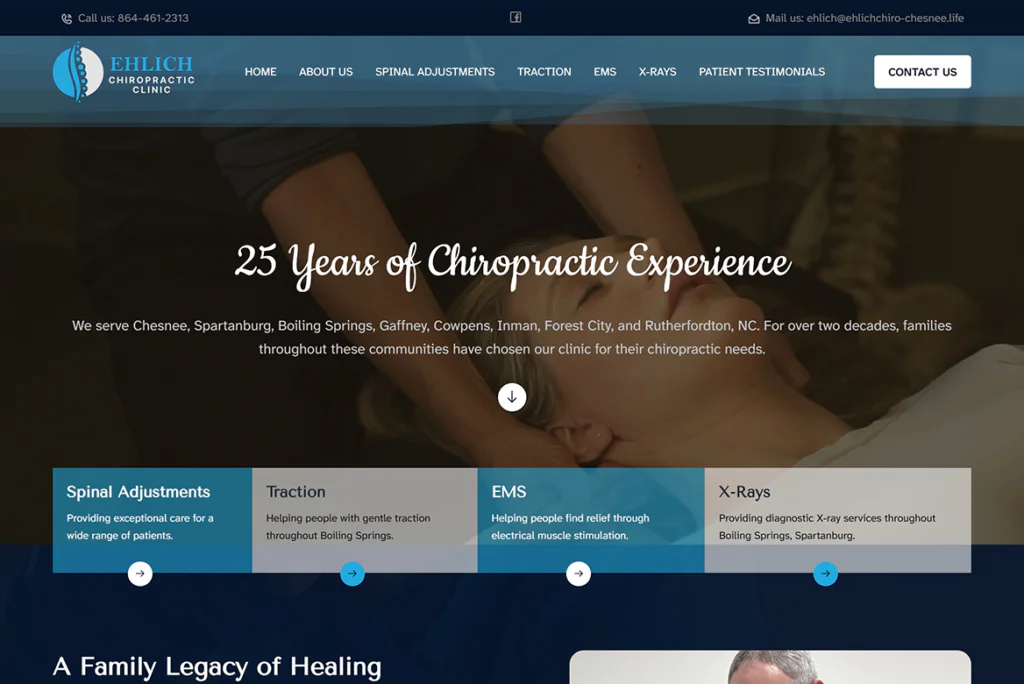
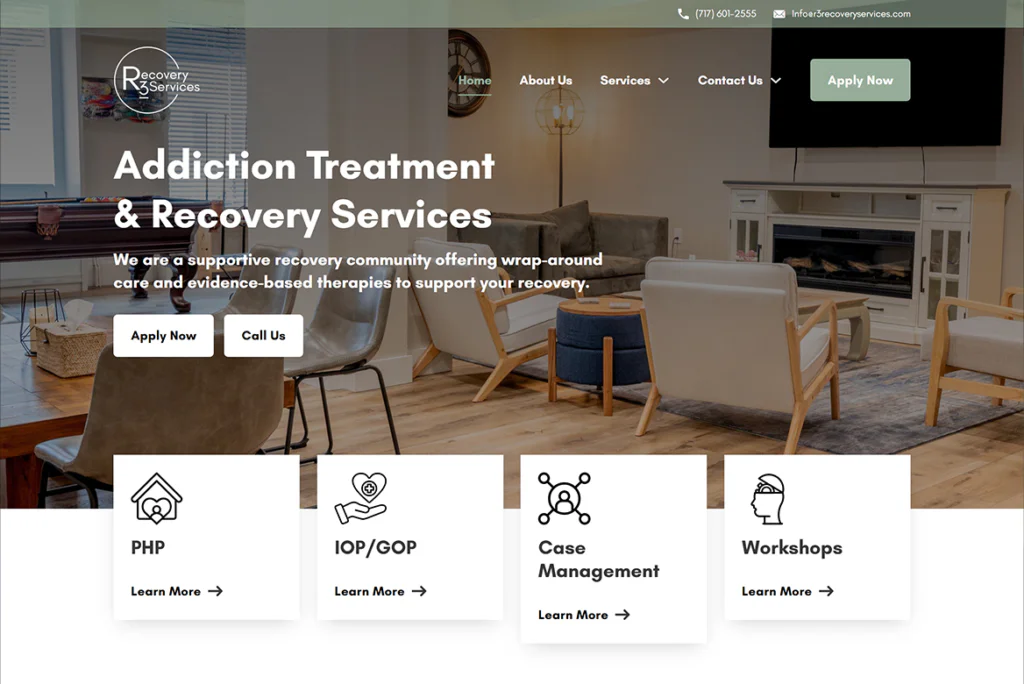
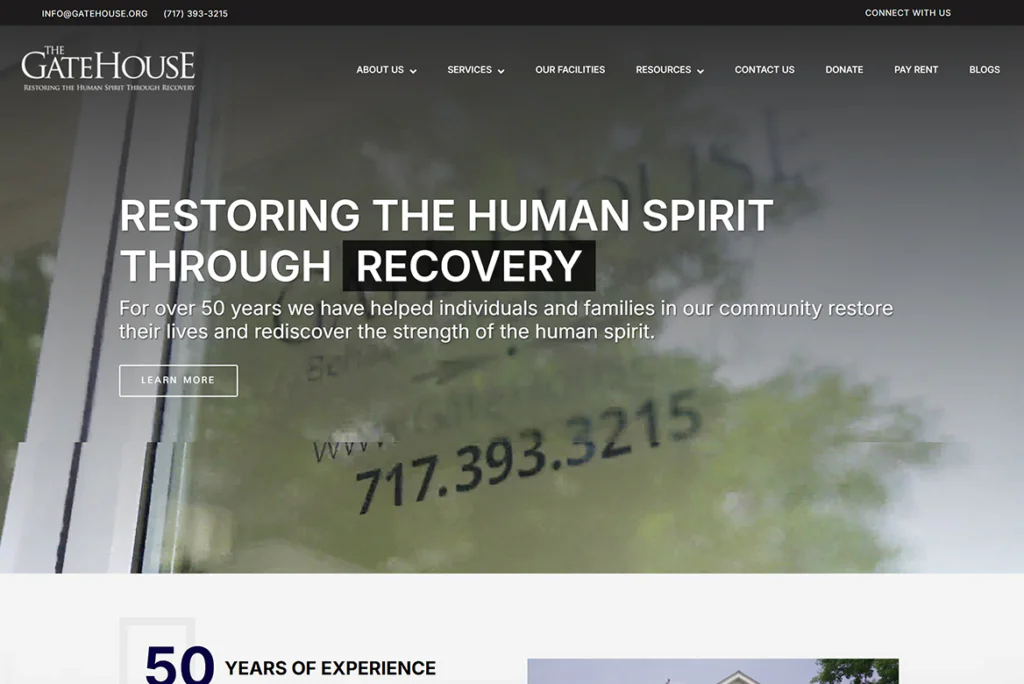
How Does Healthcare Website Design Help Generate Patients?
Healthcare website design helps generate patients by making it easy for users to find information, trust your practice, and take action quickly. A properly structured website guides visitors toward calling, booking, or submitting a form, increasing conversions from existing traffic without needing additional advertising spend.
What Healthcare Website Design Does
A properly built healthcare website turns online searches into booked appointments by removing friction, building trust quickly, and guiding patients to take action. It aligns your website with how patients actually make decisions so your practice captures demand instead of losing it.
When a potential patient lands on your website, they are not browsing casually. They are trying to determine, often within seconds, whether your practice can help them and whether they feel comfortable choosing you.
A properly built site answers those questions immediately, which increases calls, form submissions, and scheduled appointments without requiring additional ad spend.
This directly impacts lead generation by ensuring every visitor has a clear next step. Whether it is calling your office, submitting a form, or booking online, the site is structured to capture that intent at multiple points instead of relying on a single contact page. More captured leads turn into more patient conversations, which ultimately drives consistent revenue growth for your practice.
Visibility also improves because search engines prioritize websites that are fast, mobile-friendly, and structured around real user behavior. A well-built site supports your rankings in both traditional search and AI-driven results, making it easier for patients in your area to find you when they need care. Increased visibility brings in more qualified traffic, not just more traffic.
Revenue growth comes from conversion efficiency. Instead of needing more visitors, your website does a better job converting the visitors you already have. This lowers your cost per acquisition and increases the return on any marketing efforts connected to your site.
A high-performing healthcare website consistently delivers:
- More qualified patient inquiries from organic search
- Increased phone calls and appointment bookings
- Higher conversion rates from existing traffic
- Stronger visibility in local search results
- Improved return on marketing investment
The result is a website that functions as a reliable patient acquisition system, not just an online brochure.
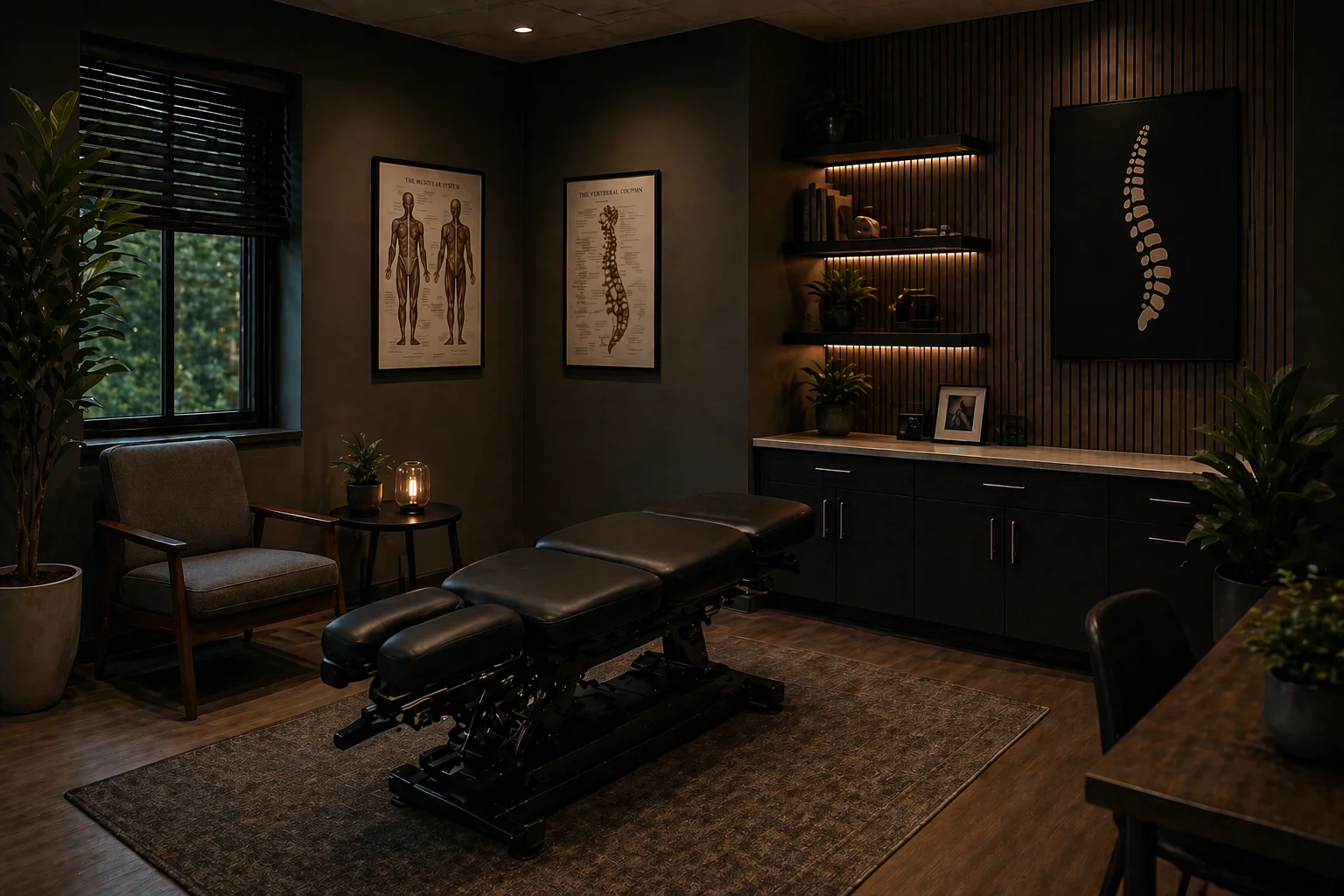
Will a Better Healthcare Website Increase Appointment Bookings?
Yes, a better healthcare website increases appointment bookings by reducing friction and improving the patient experience. When users can quickly find answers, trust your practice, and easily schedule, they are far more likely to take action instead of leaving and choosing a competitor.
Why Healthcare Website Design Matters
Your website experience determines whether patients choose your practice or move on to a competitor. When your website fails to meet patient expectations, you are not just losing traffic, you are losing real appointments and revenue every day.
If your website does not quickly answer questions, build trust, and provide a clear path to booking, patients leave. They do not hesitate or come back later. They choose the next provider whose website makes them feel confident and makes taking action easy. This means your competitors are capturing patients who were already searching for your services in your area.
In the short term, this shows up as missed calls, fewer form submissions, and empty appointment slots that should have been filled. Even if you are investing in SEO, Google Ads, or social media, a poorly performing website wastes that effort because visitors do not convert once they arrive. You end up paying for traffic that turns into nothing.
There is also a trust issue that happens immediately. Patients judge the quality of care based on your website experience. Healthcare graphic design strengthens your brand’s credibility by creating a professional, trustworthy visual experience that influences how patients perceive your care. If your site is slow, outdated, or difficult to navigate, it creates doubt. That doubt is enough to push someone toward a competitor who presents their services more clearly and professionally.
The long-term impact is where the real loss compounds. Every missed patient is not just a single appointment. It is the lifetime value of that patient, including follow-ups, referrals, and repeat visits. Over time, that adds up to a significant gap between your practice and competitors who have a high-performing website in place.
Your visibility also suffers long term. Search engines prioritize websites that perform well for users. If your site has high bounce rates, slow speeds, or poor mobile usability, your rankings decline. As your rankings drop, fewer patients find you, which further reduces opportunities for new appointments.
At the same time, competitors with better websites continue to gain momentum. Healthcare social media marketing builds trust and visibility by engaging with patients where they spend time online, supporting awareness and influencing decision-making before they ever visit your website. They capture more patients, generate more reviews, strengthen their online presence, and build authority in your market. This creates a cycle where they become increasingly dominant while your practice falls further behind.
Without a properly built website, the gap widens over time:
- Fewer patients choosing your practice
- Lower conversion rates from existing traffic
- Declining visibility in search results
- Increased dependence on paid advertising
- Lost lifetime value from missed patient relationships
Healthcare website design is not just about having an online presence. It directly impacts whether your practice grows, stays stagnant, or loses ground to competitors who are better positioned to convert the same patients you are trying to reach.
Website Design for Healthcare Case Studies
Multi-Location Primary Care Network Website Redesign – St. George, Utah
A regional primary care network with multiple locations struggled with an outdated website that lacked mobile responsiveness and clear navigation, leading to missed appointment opportunities and poor patient engagement. A complete website redesign focused on improving user experience, simplifying navigation, and optimizing for mobile devices. Key updates included streamlined service pages, clear calls-to-action for appointment scheduling, and faster load speeds. Within four months of launch, the practice saw a 48% increase in online appointment requests, a 35% reduction in bounce rate, and improved search visibility for location-based queries. The redesigned website created a more accessible and trustworthy digital presence, directly contributing to increased patient acquisition across all locations.
Chiropractic Clinic Website Conversion Optimization – Waco, Texas
A chiropractic clinic relied heavily on referrals but lacked a strong online presence, resulting in inconsistent patient flow. Their existing website was slow, visually outdated, and did not effectively communicate services or build trust. A targeted website redesign prioritized conversion optimization, including improved page structure, patient-focused messaging, and prominent contact forms. Additional enhancements included optimized service pages, local SEO integration, and trust-building elements such as testimonials and clear treatment explanations. As a result, the clinic experienced a 62% increase in website-generated leads, a 40% increase in time spent on site, and significantly higher engagement on mobile devices. The updated design positioned the clinic as a credible and professional provider, leading to more consistent patient inquiries.
Specialty Healthcare Practice Website Performance Overhaul – Erie, Pennsylvania
A specialty healthcare provider faced declining website performance due to slow load times, outdated design, and lack of technical optimization. Patients frequently abandoned the site before completing contact forms, impacting revenue and growth. A full website overhaul addressed both design and technical performance, including faster hosting, improved site architecture, and optimized content layout. The redesign emphasized clarity, speed, and ease of use, ensuring patients could quickly find services and take action. Following the launch, the practice saw a 55% increase in form submissions, a 50% improvement in page load speed, and higher rankings for competitive healthcare keywords. The improved website not only enhanced user experience but also became a key driver of patient acquisition and long-term growth.
Healthcare Website Design Data and Trends
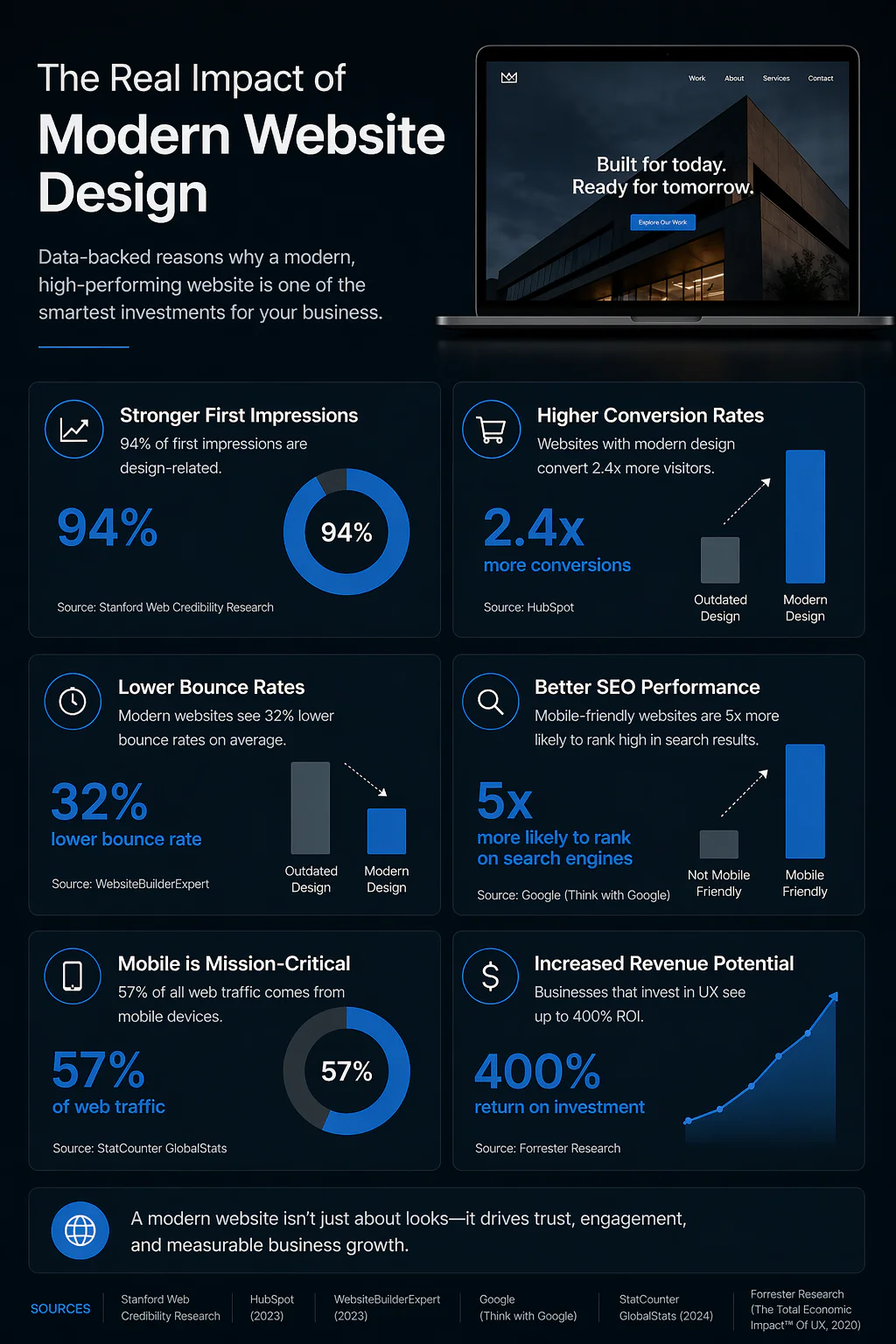
Patients judge providers based on website quality:
94% of first impressions are related to website design, meaning poor design directly impacts patient trust and credibility.
Poor website experience drives patients away:
88% of online users are less likely to return to a website after a bad user experience, which directly impacts patient retention and conversions.
Healthcare portals must be easy to use or patients disengage:
75.1% of patients reported that healthcare portals were easy to use, and usability was strongly tied to satisfaction and continued use—showing that design directly impacts engagement.
Why Do Patients Leave Healthcare Websites Without Booking?
Patients leave healthcare websites when they cannot quickly find answers, feel uncertain about the provider, or encounter a confusing user experience on the best healthcare website design. Slow load times, poor mobile design, and unclear next steps create doubt, which leads patients to choose a competitor with a more user-friendly website and best healthcare website design.
What Makes a Healthcare Website Rank in Search Results?
A healthcare website ranks in search results when it combines strong SEO, fast performance, mobile optimization, and content aligned with patient search intent. Search engines prioritize websites that provide clear answers, load quickly, and deliver a positive user experience across all devices.
How to Choose a Healthcare Website Design Company
Choosing the right healthcare web design partner comes down to finding a partner that understands how to turn patient searches into booked appointments, not just one that builds visually appealing websites. The focus should always be on results that impact your practice’s growth.
What to look for starts with experience in the healthcare industry. Medical websites require a different approach than general business sites, including an understanding of patient behavior, compliance requirements, and how healthcare decisions are made online. The provider should also have a clear, structured process that covers research, content development, technical performance, and conversion strategy. Most importantly, they should be able to show measurable results, such as increased calls, appointment bookings, and improved search visibility for similar practices.
What most providers get wrong is treating healthcare like any other industry. Many rely on generic SEO tactics or templated designs that do not address the urgency and emotional state of patients. Without healthcare-specific knowledge, they miss critical elements that drive trust and action. This often leads to websites that look professional but fail to generate consistent patient inquiries. Even when paired with services like Search Engine Optimization, the results fall short because the foundation is not built for how patients actually search and decide.
What actually matters is performance. A strong healthcare website design agency measures success by how many leads, calls, and booked appointments your website generates. Your site should support and enhance other marketing efforts, whether that includes organic search, paid campaigns, or social media. When paired with strategies like Google Ads, the website should convert that traffic efficiently, ensuring you are not wasting budget.
At the end of the day, the right provider is one that builds a website designed to produce a clear return on investment, not just one that checks design boxes.
Healthcare Website Design That Builds Trust and Drives Patient Conversions
MFG Wellness provides professional healthcare website design services created to help medical practices establish credibility, improve user experience, and attract more patients online. Your website is often the first interaction potential patients have with your practice, and a well-designed site can make a powerful first impression while encouraging visitors to take action.
With more than 30 years of combined marketing experience and over 25 years of direct experience in the medical field, our team understands the importance of creating high-performing websites in the healthcare industry. Effective healthcare website design goes beyond aesthetics. It involves strategic layouts, mobile responsiveness, easy navigation, fast loading speeds, and conversion-focused elements that help turn visitors into patients.
Our expertise in healthcare website design allows us to create customized websites tailored to the specific needs of healthcare providers. Whether you need service pages, appointment request forms, patient resources, custom branding, local SEO integration, or HIPAA-conscious design considerations, our team builds websites that are functional, professional, and designed for growth.
Our background in the social sciences through Harrisburg Area Community College gives us insight into how users interact with websites and what motivates them to make healthcare decisions online. This perspective helps us design websites that are intuitive, informative, and built to encourage trust and conversions.
MFG Wellness leadership has been featured in an interview with Fox Business discussing economic conditions and business strategy. This recognition highlights the expertise and strategic thinking behind the healthcare-focused digital solutions we provide.
When healthcare providers partner with MFG Wellness, they gain a trusted team dedicated to creating high-performing websites that strengthen credibility, improve patient engagement, and support long-term business growth.
What Should You Look For in a Healthcare Website Design Company?
You should look for a healthcare website design company that focuses on patient acquisition, not just design. The right partner understands healthcare search behavior, builds websites that convert visitors into appointments, and can demonstrate measurable results such as increased calls, bookings, and search visibility.
Healthcare Website Design FAQs
How is healthcare website design different from general website design?
Healthcare website design differs from general website design because it must address urgency, trust, and clarity simultaneously. Patients are often making quick decisions based on limited information, so the design and content must guide them efficiently. This requires a structure focused on patient questions, easy navigation, and clear next steps that support booking an appointment without confusion.
How long does it take to complete a healthcare website project?
Most healthcare website projects take between eight and twelve weeks, depending on the size of the practice and the amount of content required. Timelines can vary based on how quickly information is gathered, reviewed, and approved, but a structured process ensures the site is built correctly rather than rushed.
Can a healthcare website help reduce front desk workload?
Yes, a properly built website can significantly reduce incoming calls by providing clear answers, online scheduling, and easy access to information. When patients can find what they need and book appointments online, it limits repetitive questions and allows your staff to focus on in-office patient care.
Do I need ongoing updates after the website is launched?
Yes, ongoing updates are necessary to maintain performance, security, and visibility. Healthcare website maintenance keeps your site secure, fast, and fully functional so it continues to convert visitors into patients without disruptions or performance issues.
Will my website work with other marketing efforts?
A well-built healthcare website is designed to support all marketing channels. Whether traffic comes from search engines, paid ads, or social media, the website should guide visitors toward taking action. This ensures your marketing efforts are working together rather than operating separately.
How a High-Performing Website Drives Patient Growth
Your website directly impacts how many patients find your practice, contact your office, and book appointments. A properly built site increases visibility in search, captures more qualified leads, and converts those visitors into consistent patient growth. Instead of losing opportunities to competitors, your website becomes a reliable driver of calls, form submissions, and scheduled visits. When your site is aligned with how patients search and make decisions, every marketing effort performs better. The result is a stronger online presence, improved return on investment, and a steady flow of new patients supporting long-term practice growth.
Ready to Build a Website That Brings In Patients?
Your website is either growing your practice or sending prospective patients to a competitor whose site does a better job answering their questions. MFG Wellness builds healthcare websites designed around the people who actually use them, worried patients looking for the right provider, and the practices ready to be that provider.